
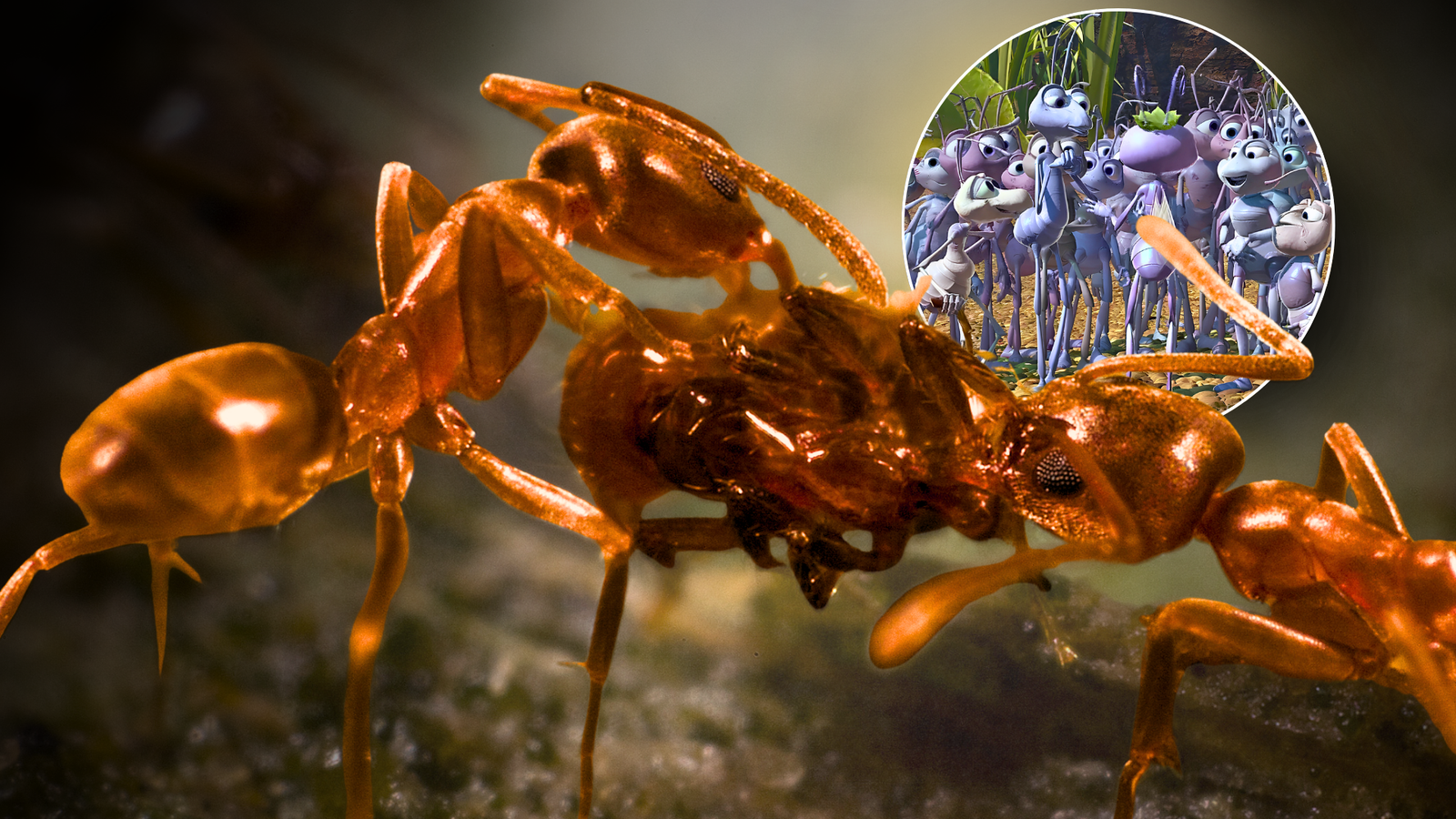
Argentine ants may be tiny, but their territorial fights can be intense.
These insects form enormous groups called supercolonies, made up of many nests whose members cooperate. While ants belonging to the same group usually tolerate one another, encounters with rival colonies can lead to violent clashes and deaths.
A 2006 study documented 16 areas where competing Argentine ant supercolonies met. Researchers monitored nine of these areas weekly for six months and found repeated fighting.
Originally from South America, Argentine ants have spread to other regions. One supercolony studied in southern Europe stretched more than 6,000 kilometers.
Interestingly, ants can recognize members of their own group through chemical cues. A 2010 experiment found that ants belonging to a major California supercolony showed no aggression toward tested Japanese ants in 50 trials. Yet they reacted aggressively to a rival California group in 42 out of 50 trials.
Entomologist Mark W. Moffett revisited the subject in a September 2026 Washington Post opinion essay, bringing attention back to scientific findings published years earlier.
Scientists have documented persistent territorial fighting, although reports of exactly two supercolonies battling continuously for decades remain unverified.
Would researchers find those same territorial battles if they returned today?