
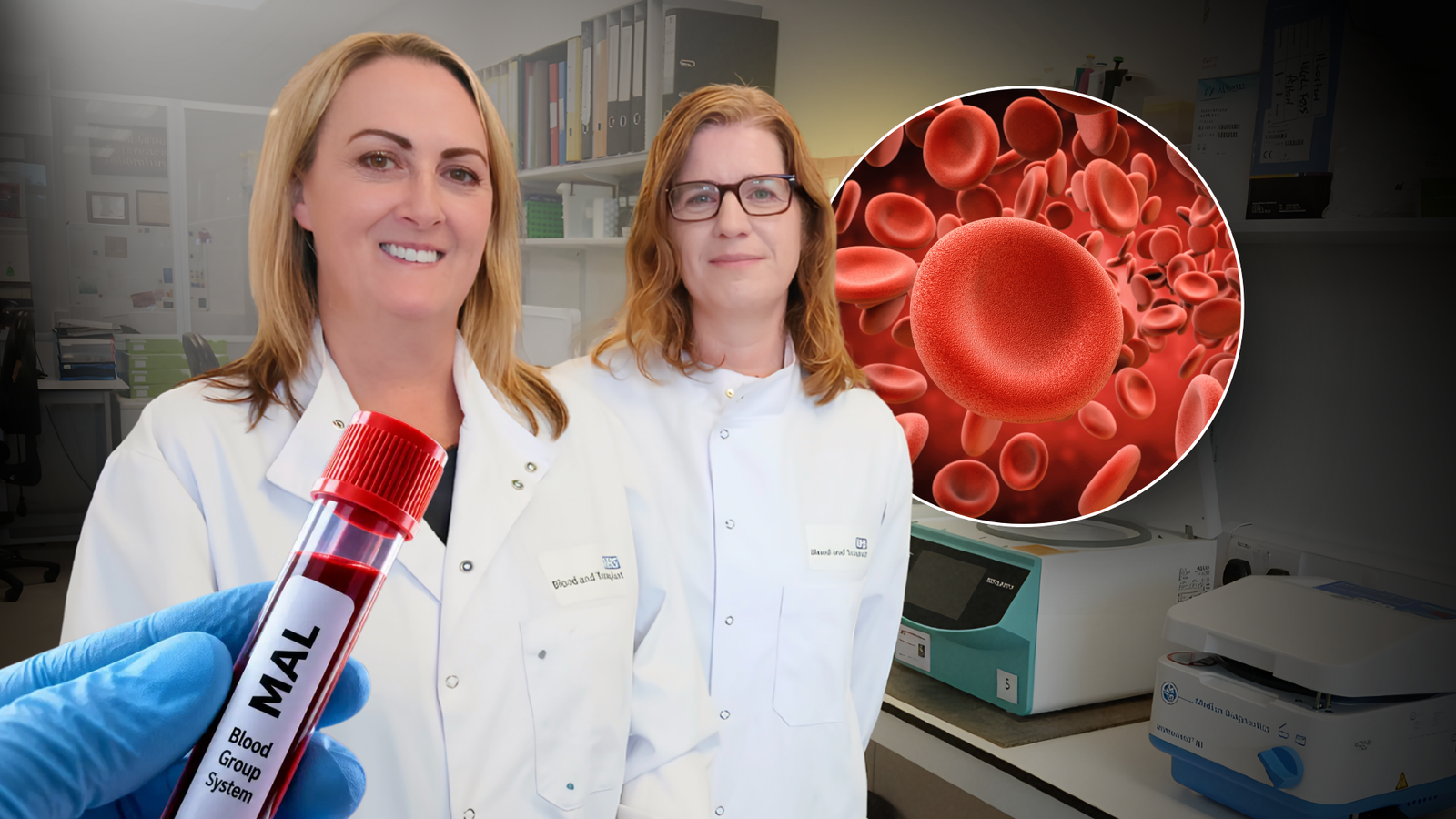
A blood-group mystery that lasted 5 decades was finally solved in 2024.
Scientists first identified the AnWj blood antigen in 1972, but its genetic explanation remained unknown for decades. In research published in 2024, a team led by NHS Blood and Transplant identified deletions affecting the MAL gene in rare inherited AnWj-negative cases.
Researchers also confirmed that the AnWj antigen is carried by the Mal protein on red blood cells. Their findings helped establish MAL as a blood group system, officially designated 047 by the International Society of Blood Transfusion (ISBT).
According to NHS Blood and Transplant, more than 99.9% of people are AnWj-positive. However, some AnWj-negative cases occur when certain illnesses suppress antigen expression, meaning the inherited MAL gene deletion does not explain every case.
The discovery matters for blood transfusions. Anti-AnWj antibodies can cause reactions when incompatible blood is given. Understanding the genetic basis supports the development of tests that could help identify rare patients and suitable donors.
For Filipinos, the connection lies in transfusion safety. Philippine Department of Health regulations already cover blood compatibility testing, antibody screening and specialist blood-bank functions. However, MAL-specific testing availability, local cases and prevalence remain unverified.
ABO and Rh blood types remain essential. Solving this decades-old mystery gives scientists another way to understand rare blood compatibility problems.
Take a closer look at how scientists finally solved a blood-group mystery that lasted 5 decades.
Sources: Tilley et al., Blood (2024), DOI 10.1182/blood.2024025099; NHS Blood and Transplant (2024); International Society of Blood Transfusion MAL registry and working-party report; Philippine DOH Administrative Orders 2008-0008 and 2005-0002.