
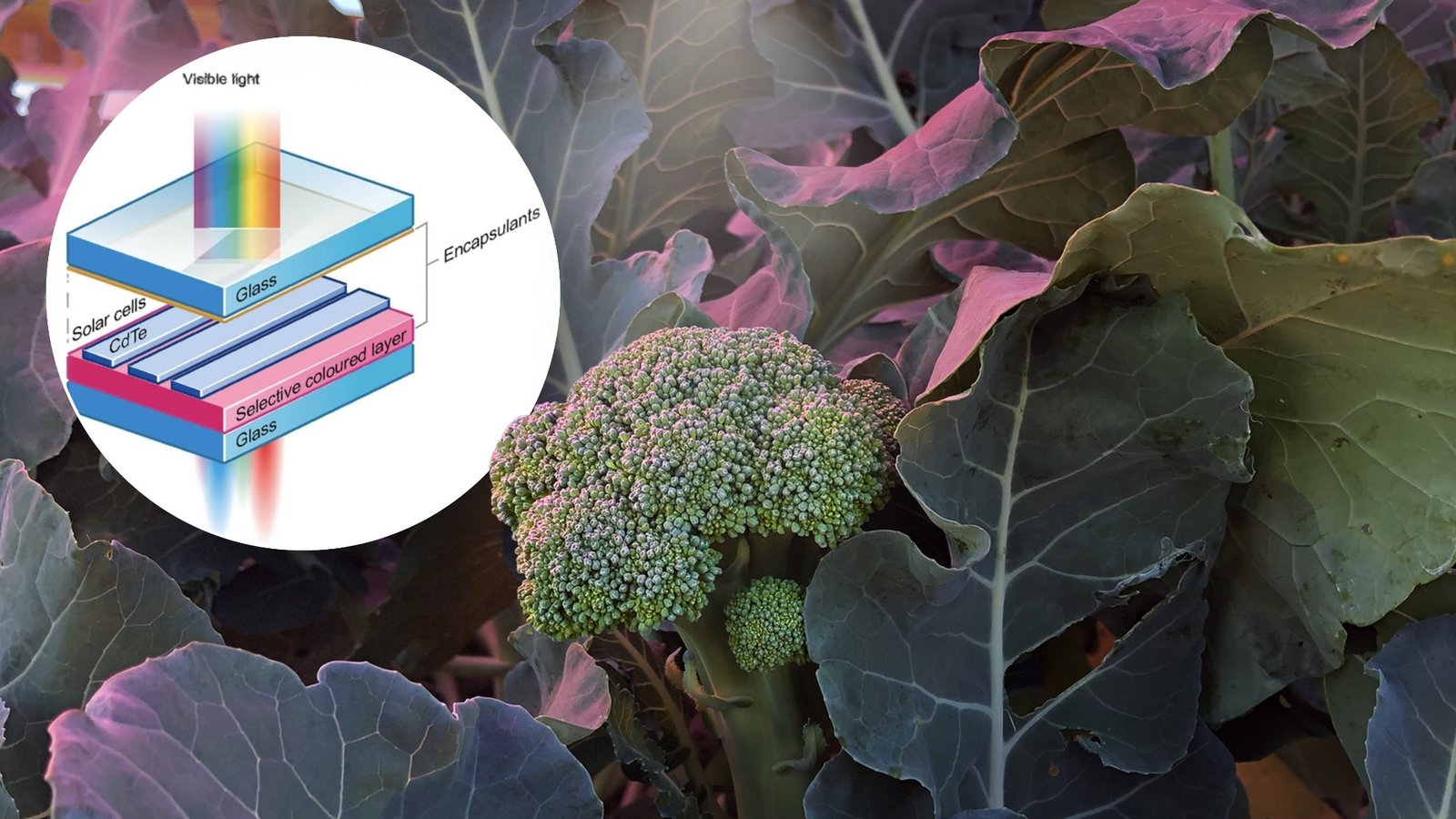
Rose-tinted solar panels generated electricity while broccoli grew underneath in a 2024 Swedish trial.
By harvest, broccoli grown under the semi-transparent panels reached a size comparable with the full-sun crop.
There was an important trade-off.
Maturity took 25 additional days.
Researchers also reported 4.5× radiation-use efficiency under the denser setup.
That does not mean 4.5× more broccoli.
It measures how efficiently the crop produced biomass relative to the radiation it received.
An earlier 2023 configuration produced significantly lower yield because the plants received too little light.
Researchers raised the structures for 2024.
More light reached the crop, and the yield difference was no longer statistically significant.
For the Philippines, the potential goes beyond the color of the panels.
Agrivoltaics could allow some farms to keep producing food while generating electricity on the same land.
That power could potentially support irrigation pumps.
It could also be used for cooling or storage.
Greenhouses and post-harvest equipment are other possible farm uses.
Partial shade may help moderate heat in suitable systems.
Broader agrivoltaic research also suggests possible benefits for water use, although those results cannot simply be assumed for Philippine farms.
There may also be an economic opportunity.
Farmers or cooperatives could benefit when they actually receive the energy savings or revenue connected to the system.
The research does not establish that this would happen automatically.
Philippine interest in agrivoltaics already exists.
Local research is underway, and crops are already being grown within some solar developments.
That does not prove these specific Rose panels will work here.
A Philippine farm may use a different crop.
The climate is different.
The system design may also need to change.
The promise is shared land.
Local testing still has to prove whether that promise works for Filipino farmers.
What would a Philippine field trial need to prove before farmers could take this seriously?